
Not too long ago, artificial intelligence was imagined as some scene out of a sci-fi movie, and today, it’s a part of our daily life. It has quickly become one of the most effective tools in a marketer’s toolbox today, especially in areas like AI in marketing and marketing automation. From automating everyday tasks to creating specially made customer experiences, AI is changing the way brands connect with people.
Talking about the reality of technology, it will always be insufficient on its own. The human touch is what really makes AI useful in marketing. Even the most intelligent algorithm can fail if it does not understand people, their feelings, and their cultural background. Let’s talk about the development of artificial intelligence in digital marketing and how it can increase human creativity.
AI in Marketing
AI in marketing is all about using technology to make smarter decisions. It can process huge amounts of data in seconds, spot patterns, and help brands deliver relevant messages at just the right time.
Take the example of a chatbot that answers customer queries instantly, a recommendation system that knows exactly what product you’re likely to buy next, or an email tool that figures out when you’re most likely to open a message. All of this is done with the help of AI, and they’re already working 24 hours collecting and understanding your data, likes, and dislikes in the apps and websites you use every day. This could be a perfect example of how artificial intelligence in digital marketing works in real life.
How AI Is Transforming Digital Marketing
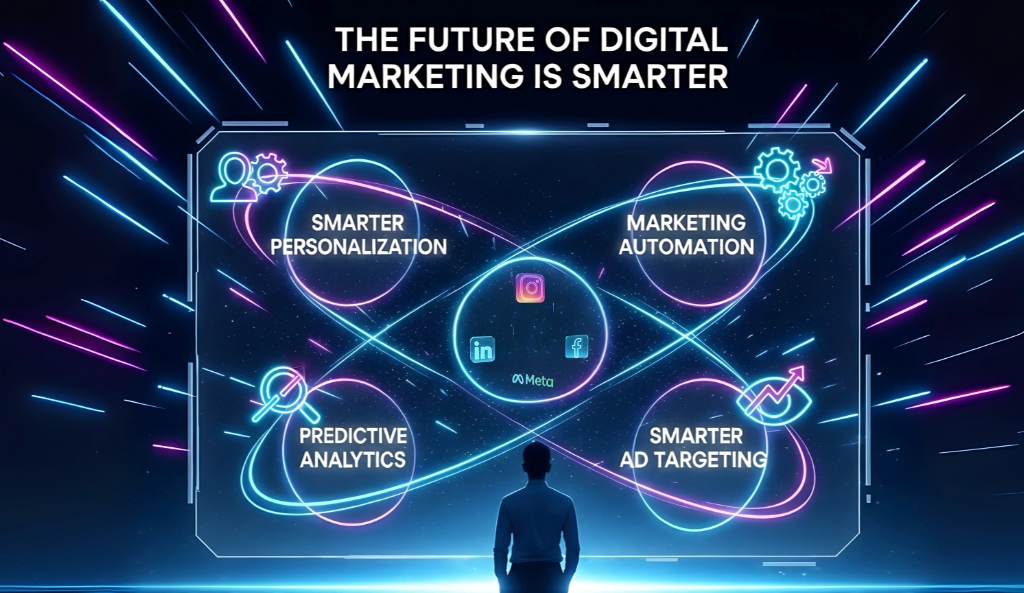
Smarter Personalization
Today’s audience wants brands to approach them. They don’t like seeing ads that aren’t related to them; they want messages, products, and deals of their own interests. AI can do this very easily just by looking at things like browsing history, buying habits, and even small clues from social media activity. It’s like that one obsessed friend who observes what food you order, what brands you wear, and even what memes you like.
AI tools can make hundreds of customized emails instead of just one generic one. This way, everyone gets something that is related to their own interests. This type of personalization usually leads to more engagement and better results.
Marketing Automation
Marketing automation is not a new concept, but AI takes it to a whole different level. It’s not just about scheduling posts or emails; AI learns from user behavior and uses it in real time. It is capable of sending an email at the exact moment when there are more chances for the customer to read it, choosing the perfect tone for a push notification, or showing a blog article that matches someone’s current mood and needs. This kind of marketing automation not only saves time but also ensures marketers spend less time on repetitive work and more time on strategy and creativity, while customers get communications that feel natural rather than robotic.
Predictive Analytics
Think of predictive analytics as a weather forecast for your marketing; it studies past patterns in order to predict what’s coming in the future. AI can also guess what will happen in the future by looking at data from the past. It can tell an online store when demand for a product will go up, help a brand get the right amount of stock ready, or even suggest which ad campaign is most likely to do well before it starts smart bidding and targeting strategies so that they reach the right audience at the right time.
Smarter Ad Targeting
The introduction of smart bidding and targeting strategies has completely changed online advertising. Platforms like Google Ads and Meta Ads now use AI forces to make the most out of their ad spend without constantly changing settings manually.
Why AI Can Never Replace Human Marketers
It’s normal to think about if AI can replace humans one day and eat their jobs. The reality is, AI can do a lot, but it can’t replace creativity, emotional intelligence, and strategic thinking. It doesn’t understand cultural nuances or humor the way people do. Imagine AI as your road-trip buddy; it handles the maps, snacks, and playlist, but you’re still the one deciding where to go.
AI in Marketing: Getting Started
The secret is to keep things simple if you’re new to AI in marketing. Start by automating simple, repetitive tasks like email scheduling or creating chatbots to answer FAQs. Try out AI tools that can assist with predictive analytics or content recommendations.
And the most important thing: always cross-check the results to ensure that your personality and brand voice are maintained. AI can only help in your marketing, never take the place of human touch.
Conclusion:
Artificial intelligence in digital marketing is not just a trend, but it’s uplifting how brands talk to their audience and how customers talk back. If used correctly, AI has the ability to completely change marketing by making it quicker and more intelligent, but a human touch is always necessary.